How to Get Yoga Clients Without Instagram (10 Real Ways)
If you're tired of Instagram — the algorithm changes, the engagement decline, the emotional cost of posting into the void — you don't have to keep doing it.
There are 10 ways to get yoga clients in 2026 that don't require a single post. Most yoga teachers ignore the first three.
This article gives you all 10, with realistic timeframes, costs, and which suits which kind of teacher. By the end you'll have a non-Instagram client acquisition plan tailored to your situation.
A note before we start: the most resilient yoga businesses don't quit Instagram entirely — they reduce their dependence on it. Diversification isn't anti-Instagram. It's anti-fragile.
Why diversifying matters
In 2019, Instagram reach for small accounts was ~10%. In 2026, it's closer to 1-2%. Every year, the platform requires more posts, more Reels, more spend to reach the same audience.
Teachers who built their entire business on Instagram are watching it slowly collapse. Teachers who built across 3-4 channels are stable.
The shift isn't dramatic — you don't need to quit Instagram tomorrow. You need to add one or two channels alongside it so that an algorithm change doesn't end your practice.
Here are the 10 channels, in order of speed-to-results for solo yoga teachers.

1. Google Business Profile (the fastest win)
Time to first client: 1–4 weeks Cost: Free Effort: 2 hours setup + 15 min/week maintenance
When someone Googles "yoga near me" or "yoga in [your suburb]," the top three results are Google Business Profiles, not Instagram accounts. These people have immediate booking intent. They're not browsing. They're choosing.
If you don't have a profile, you don't exist for this search. If you have one but it's incomplete, you lose to the studio next door that filled theirs out.
To set up a high-converting Google Business Profile:
- Go to google.com/business and create a profile under your name + service area
- Add 10+ photos: your studio, you teaching, students (with permission), the entrance, a class scene
- Fill every field — hours, services, prices, links, attributes
- Add 3–5 services with descriptions ("60-min Vinyasa Flow", "Beginner Series", etc.)
- Ask your existing students for Google reviews (this is the single biggest ranking factor)
- Post weekly Updates — these show in your profile and signal activity to Google
10 Google reviews moves you up in local rankings dramatically. 30 reviews usually wins your local search outright.
Verdict: Every yoga teacher with a physical location should do this. Today. It's the highest-ROI hour you'll spend this quarter.
2. Email list (the most undervalued channel)
Time to first client: 2–6 weeks Cost: $0–30/month Effort: 30 min/week
Instagram followers don't belong to you. Email subscribers do.
When Instagram changes the algorithm tomorrow, your email list still works the same way. When Instagram bans your account by mistake (it happens), your email list is still there.
Building an email list as a yoga teacher is easier than most teachers think. The barrier isn't getting people to subscribe — it's offering something worth subscribing for.
A 5-step email funnel that converts:
- Create a lead magnet — a free 5-day morning practice, a 20-minute audio meditation, a printable home practice guide. Something a stranger would actually exchange their email for.
- Set up a tool — Brevo (free up to 300/day), MailerLite (free up to 1,000 subscribers), or Beehiiv. All take an afternoon.
- Add a signup form to your website footer and on your Instagram bio link
- Write a 4-email welcome sequence — Day 1: deliver the freebie. Day 3: introduce yourself + your practice philosophy. Day 5: a useful tip. Day 7: invite to a free first class.
- Send one email a week thereafter — class schedules, workshops, occasional teaching content. Keep it short, conversational, useful.
A list of 200 engaged email subscribers consistently outperforms an Instagram account with 5,000 followers for actually booking classes. The medium is private. The trust is higher.
3. Referral system (the highest-converting channel)
Time to first client: 1–3 weeks Cost: $0 Effort: One conversation with each existing student
Most yoga teachers think they have a referral system because they've said "tell your friends!" once at the end of a class. That's not a system. That's a wish.
A real referral system has three parts:
Part 1: Ask explicitly. After someone has taken 3-5 classes, send a personal message: "I'm so glad you're part of the practice. If you know one person who'd love this — would you mind sharing my link?" Direct asks convert 5–10× better than passive hopes.
Part 2: Make it easy. Give them a thing to share — a free first-class code, a link to a specific class, an Instagram post they can repost, a screenshot. Don't make them write their own pitch.
Part 3: Thank them visibly. When someone's friend joins, send a quick voice note: "[Name's] friend Lisa just came to her first class — thank you for sending her my way." This loops them back into recommending again.
Yoga teachers who do this routinely report 30-50% of their new students come from referrals.
For more on systematizing your client experience to make referrals natural, see our Business Health Check — it identifies where your client journey is leaking referral potential.
4. Local partnerships (free clients via aligned businesses)
Time to first client: 2–6 weeks Cost: $0 Effort: 5 conversations
Every business in your area that serves a similar audience is a potential partner. Cafés, physios, women's clothing boutiques, naturopaths, lactation consultants, hair salons, bookstores, plant shops.
The simplest partnership structure:
- They display your cards or flyers; you display theirs
- You offer their clients a discount; they offer yours one back
- You collaborate on a quarterly event (a free yoga + smoothie morning at the café, a wellness pop-up)
For each partner, the math is the same: their happy customers become potential yours, and vice versa. Zero ad spend. High-quality leads.
To start:
- List 10 local businesses whose customers overlap with yours
- Walk in (don't email) and have a conversation with the owner
- Bring a small gift if it's a café or food business — buying a coffee makes the relationship feel mutual
The first three "yes"-es of this will book more new students than three months of Instagram posts.
5. Free intro events (in-person discovery)
Time to first client: 1–4 weeks Cost: $0–100 Effort: 3–5 hours per event
Local festivals, wellness markets, community events, charity fundraisers — most of them welcome a free 30-minute yoga taster or a meditation moment.
People who try a free intro session are 4–7× more likely to book a paid class than people who only ever saw your Instagram. The in-person trust transfer is enormous.
Where to find these:
- Eventbrite searches for "[your city] wellness", "[your city] festival"
- Local council community boards
- Cafés that host weekend markets
- Schools and community centres
- Charity calendar / sponsorship listings
For each event you teach, capture emails on the spot ("Want my free 5-day morning practice? Pop your email here") and follow up within 48 hours.
6. Podcast appearances (compound long-term traffic)
Time to first client: 2–8 weeks Cost: Free Effort: 1-2 hours per podcast
Wellness podcasts hungry for guests outnumber qualified guests willing to be interviewed. This is your opportunity.
Search "wellness podcast" on Spotify or Apple. Filter for ones with 20-200 reviews — large enough to have an audience, small enough to need guests.
Pitch yourself in two sentences:
- "Hi, I'm [name], a yoga teacher specializing in [niche]. I'd love to come on the podcast to talk about [topic relevant to their audience]. Here's a 90-second voice note about me ↓"
Out of every 10 pitches, expect 2-3 yeses. Each appearance gives you:
- An evergreen audio episode that drives traffic for years
- A backlink to your site (SEO gold)
- Permission to share the episode on your channels for weeks
Three podcast appearances a year compounds into a permanent traffic source.
7. Local SEO and a real website
Time to first client: 1–3 months Cost: $50–500 setup Effort: One weekend
A simple one-page website is non-negotiable. Without it, every other marketing channel leaks clients who couldn't find basic information.
What that one page must include:
- Your name and what you teach
- Class schedule (kept current)
- Pricing
- Location
- Photos (professional or great natural light selfies, not stock)
- A booking link or contact form
- Testimonials (3-5)
- An email signup form
If you're not technical, our AI Brand Kit gives you everything you need to brief a website designer — a clear color palette, brand voice, copy direction, and visual identity. It's $127 once and saves you weeks of decisions.
Once the site is up, basic local SEO:
- Title tag: "[Your name] — Yoga in [your city]"
- Meta description mentions your city and what you teach
- A blog (even one article a month) helps Google understand you exist for yoga searches in your area
8. Niche directories and listings
Time to first client: 1–3 months Cost: $0–200/year Effort: 4 hours total setup
There are directories your ideal client searches that aren't Google or Instagram. Most yoga teachers don't list themselves there.
For yoga specifically:
- Yoga Alliance directory (if you're certified — it's free and ranks high in Google)
- Mindbody if you teach group classes
- ClassPass if you want bigger volume at lower margin
- Punchpass (smaller, less crowded)
For wellness generally:
- Your country's wellness directory (Wellness Australia, Wellness Singapore, etc.)
- Local mum/parent directories if you teach prenatal/postnatal
- Corporate wellness vendor listings if you do workplace yoga
Each listing takes 20-30 minutes. Set aside one afternoon, knock out 5-8 of them.
9. Workshops and series at other studios
Time to first client: 2–4 weeks Cost: $0 (you get paid) Effort: Teaching time
Studios always need workshops and guest teachers. The teachers who pitch get the work.
A workshop at another studio gives you:
- A new audience that already takes yoga
- Paid teaching hours
- Email captures (with permission)
- Credibility for your own marketing
To pitch a workshop:
- Identify 5 studios within 30 mins of you
- Find the owner or programming manager (not the front desk)
- Pitch one specific workshop: "I'd love to teach a 90-min restorative + sound bath workshop in March or April. Here's the description, here's my outline, I'll bring the marketing copy and graphics. We split the door 70/30 in your favour."
Make it easy for them to say yes. They want workshops; they don't want to organize them.
10. Local press and media
Time to first client: 1–6 months Cost: Free Effort: Pitch + interview
Local newspapers, suburb websites, community magazines, local podcasts — they all run "featured local business" segments and "wellness column" content. Most yoga teachers never pitch them.
Three angles that get picked up:
- A community angle — "Local yoga teacher offers free classes for [cause]"
- A trend angle — "Why [your suburb] is becoming a wellness hub"
- A personal story angle — "From [previous career] to teaching yoga — [your story]"
A single local newspaper feature still drives 50-200 visitors and 5-15 new students. The article ranks in Google for years.
The right mix for solo yoga teachers
You don't need all 10. You need 3-4 that match your stage and personality.
If you're brand new (0-20 students):
- Google Business Profile (week 1)
- Referral system (week 2)
- Local partnerships (month 1)
- Free intro events (month 2)
If you're growing (20-100 students):
- Email list (build alongside Google + referrals)
- Workshops at other studios
- Podcast appearances
- A real website (if you don't have one yet)
If you're established (100+ students):
- Local press features
- Niche directories
- An owned content channel (blog, newsletter, or podcast)
- Higher-tier offers (retreats, teacher trainings)
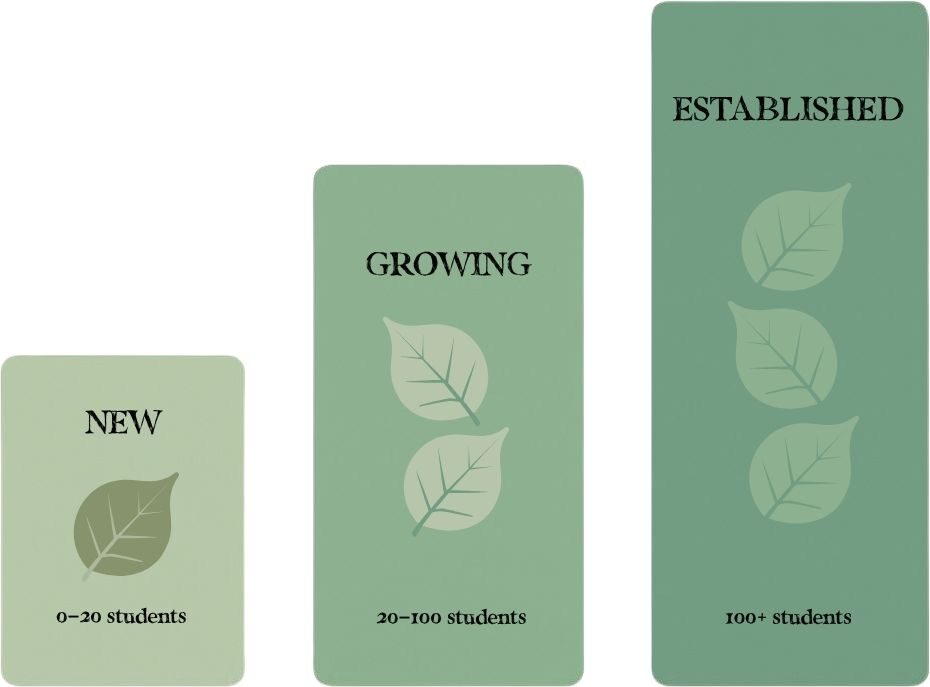
The pattern across all stages: invest in owned channels (email list, website, Google Business Profile) before you invest in rented channels (Instagram, TikTok, ClassPass). Owned channels survive algorithm changes. Rented ones don't.
What about Instagram?
You can still use Instagram. But the relationship changes.
Instead of Instagram being the place where new students discover you, it becomes the place where existing students stay engaged between classes. That changes everything about how you post.
For more on running Instagram sustainably alongside other channels, see what to post on Instagram as a yoga teacher and Instagram captions for yoga teachers.
Your next step
Pick one channel from this article that fits your stage. Block 2 hours this week. Set it up.
Then in 2 weeks, pick a second one. Then a third. By month 3, you'll have a diversified acquisition system that doesn't collapse if Instagram has a bad week.
If you're not sure which channel matches your stage, take the free Business Health Check. Five minutes, no payment, and it'll tell you exactly which channel will move the needle fastest for you specifically.
If you want a full quarter of marketing planned without thinking about it, the 90-Day Content Calendar covers email sequences, referral asks, partnership scripts, and Instagram content together.
You don't need to be everywhere. You need to be in 3 places, consistently, for long enough.
Frequently asked questions
Can yoga teachers get clients without Instagram?
Yes. The best yoga teachers diversify across Google Business Profile, email marketing, local partnerships, referral systems, and free intro events. Instagram is one channel, not the only one.
What's the fastest way to get yoga clients without social media?
A claimed and optimized Google Business Profile. People searching "yoga near me" have immediate booking intent — capturing them takes one afternoon.
Do yoga teachers need a website to get clients?
Yes. A simple one-page website with class schedule, pricing, and a booking link is essential. Without it, every other marketing channel leaks potential clients who couldn't find basic information.
How many marketing channels should a yoga teacher use?
Three to four channels run well outperforms ten channels run poorly. Pick the channels that match your stage and personality, master those, then expand.
Is email marketing better than Instagram for yoga teachers?
For booking actual classes, yes — usually 4-7× better at converting subscribers into students compared to Instagram followers. Email is private, owned, and not subject to algorithm changes.
Related reading: — What to post on Instagram as a yoga teacher — How often should yoga teachers post on Instagram? — Instagram captions for yoga teachers
Related practical guides
Keep going with the next most useful page for visibility, booking clarity, or private-client growth.
Want to check your own online presence?
Run the free website check to see what feels clear, what may cause hesitation, and which fixes matter first before a new client books.
Run the free website check